Alkemie co-directors Tracy Cowart and Sian Ricketts talk about the melding of new and old music traditions in Alkemie’s new album A Worthy Mirror.
As a Medieval ensemble what drew you to make an album of new music?
As Medievalists, we are committed to bridging the gap between the richly-textured world of the past and the more thinly-populated map of written evidence that has survived for the past 800 years. We are always cognizant of the ways in which the written record can both illuminate and distort our understanding of the Medieval reality. Discrepancies in past resources and priorities and pure chance lead to some records and repertories being preserved, while others only exist in fragments and allusions. While we do have texts for a few dozen troubadour songs attributed to women, music for only one of those works survives. With this project, we wanted to fill this lacuna, bringing these songs to life in ways that speak to both the past and to our own time.
Describe the process of selecting the texts for composition. (Did you let the composers choose their own pieces, were there any texts you wish had been set... etc?)
We used the beautiful translations in the books “Songs of the Women Troubadours” (edited and translated by Matilda Tomaryn Bruckner, Laurie Shepard, and Sarah White) as our initial source for the project. Composers chose which text they wanted to set, and whether to set it in Early Occitan, English, or some combination thereof. LI Qi, Patricia van Ness, Niccolo Seligmann, and Hai Ting Chinn set their texts in Early Occitan; Tis Kaoru Zamler-Carhart modernized their Occitan text, and created their own translation (they are a native speaker); Maya Bennardo created her own textual fragments from the English translation of her text; Gelsey Bell combined both the English translation and Early Occitan in her setting; and Raquel Acevedo Klein wrote her own text, inspired by the trobairitiz (female troubadour) texts she read.
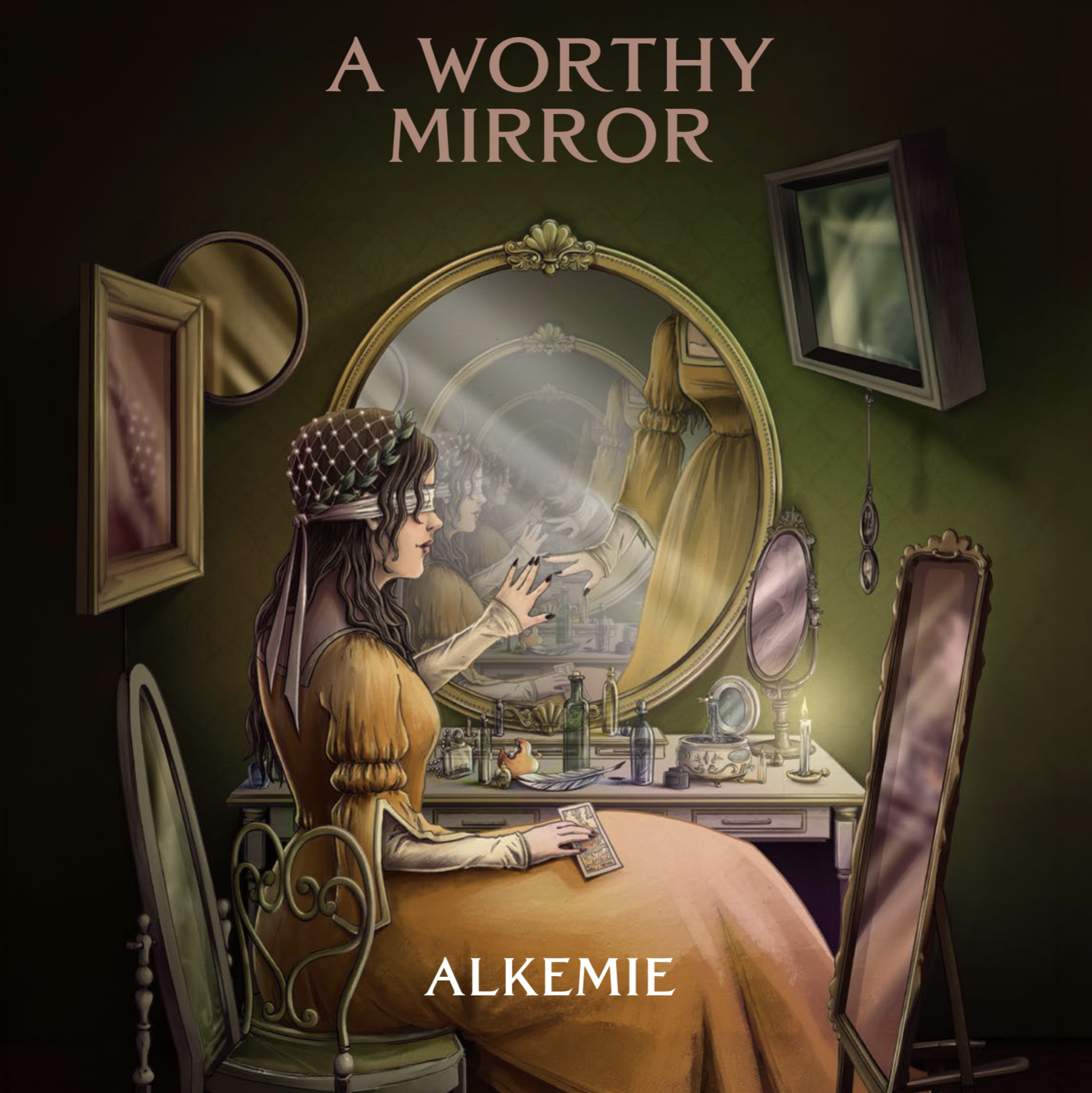
Funnily enough, the project title “A Worthy Mirror” refers to a poetic exchange between Lombarda and Bernart Arnaut d’Armagnac that is not itself set on this album. According to the narrative that accompanies their poems, Bernart sought Lombarda’s love but departed Toulouse without seeing her, leaving behind verses in which he addresses her as a “Mirror of Worth.” Lombarda answered in verse, artfully taking up his language of names and identities before turning his metaphor back upon him: which woman pleases him most, she asks, “and in which mirror you are gazing?” For us, Bernart and Lombard’s literal and poetic exchange captures something essential about this project. These songs do not offer a transparent window onto those early centuries, nor do our contemporary counterparts simply remake the past in their own image. Instead, the past and present become mirrors for one another, reflecting, refracting, and expanding what we think we recognize. Across that distance, we can ask what feels foreign and what feels familiar, and consider how a voice inherited from another time might resonate in this one.
How did you approach marrying the modern cello with Medieval instruments? What challenges did it present?
We found that the modern cello worked quite well with our Medieval instruments, in no small part due to Amanda's deep sensitivity as a player - she was (seemingly) easily able to bring her naturally louder instrument into balance with our gut-strung strings and softer winds. Adding the cello to the ensemble also had the advantage of deepening the range of our instrumental palette. Amanda’s deep experience with learning and performing new music was also extremely helpful as we grappled with scores that were very different than any we had encountered as an ensemble before!
Tell us more about the venue the Urbane Arts Club.
The Urbane Arts Club is a former speakeasy turned co-working space and community & cultural center in Prospect Park South. We love that not only is this venue in our neighborhood, its mission to foster creative expression and conversation is directly aligned with ours; its focus on literary events and topics is also deeply fitting for this project. While we don't typically explicitly encourage our audience to dress in costume, the Urbane Arts Club suggested that we do so for this event - we are curious and delighted to see what results from this prompt!
✵✵✵✵✵✵✵✵
A Worthy Mirror will be performed live in Brooklyn on November 5 at the Urbane Arts Club at 7:00pm; and in Manhattan on November 6 at All Saints Episcopal Church at 7:30pm. Both concerts will be followed by receptions with the artists.
Thursday, November 5, 7:00pm
Urbane Arts Club
1016 Beverley Rd, Brooklyn 11218
Friday, November 6, 7:30pm
All Saints Episcopal Church
230 E 60th St, 10022
